Unreal Beauty: A Display Font That Elevates Your Brand
As a small business owner who designs my own labels, social posts, and packaging, I’ve learned that typography isn’t just about “looking nice”—it’s one of the fastest ways to signal professionalism, warmth, or boldness to customers. That’s why I was immediately drawn to Unreal Beauty: a spirited, audacious display font that adds vivacity and distinctive flair without sacrificing clarity or intention.
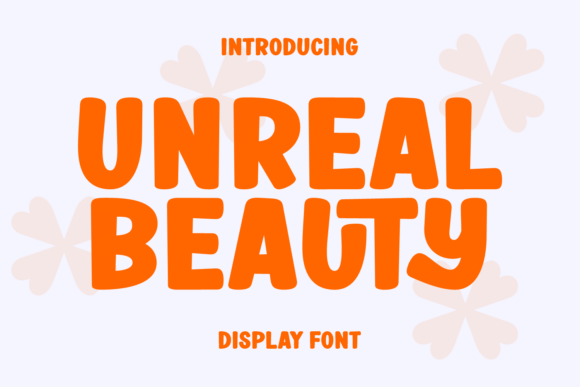
Unreal Beauty isn’t subtle—and it doesn’t need to be. Its letterforms are engagingly robust, with confident curves, balanced proportions, and a touch of playful confidence. Think of it as the kind of typeface that walks into a room and owns the space—without shouting. It carries charm and allure, yes, but also structure and reliability. That balance is rare in expressive display fonts, and it’s exactly why Unreal Beauty works so well across real business materials—not just as decoration, but as part of your brand’s voice.
I use Unreal Beauty for moments that need emphasis and personality: the name on my handmade candle labels, the headline on my café’s seasonal menu board, the logo lockup for my online boutique, and even the bold text overlay on Instagram Reels announcing new product drops. It’s not meant for body copy—but where it shines is in those high-impact, customer-facing touchpoints where first impressions matter most.
Consistency is hard when you’re juggling dozens of design tasks alone. But choosing one strong display font like Unreal Beauty—and using it intentionally—helps unify everything from your website banner to your thank-you card. When customers see that same confident, elegant-yet-lively lettering on your product label, your Instagram story, and your storefront sign, they begin to recognize your brand instantly—even before reading the words.
Take a bakery owner, for example. She might pair Unreal Beauty with a clean sans serif (like Montserrat or Inter) for her logo: “Honey & Hearth” in Unreal Beauty, followed by “Artisan Breads • Since 2020” in the supporting font. That combination feels warm, trustworthy, and human-made—not generic or automated. Or consider a skincare brand launching a new line of botanical serums: Unreal Beauty gives the product name (“Luna Bloom”) presence and sophistication on the front label, while a light serif handles ingredient lists cleanly on the back.
Readability matters—even in expressive fonts. Unreal Beauty holds up well at medium-to-large sizes across print and screen. On a 2-inch product sticker? Yes—especially if you keep it to one or two words. On a mobile-optimized website banner? Absolutely, as long as contrast is strong and spacing is generous. What I avoid is squeezing it into tiny footers, fine-print disclaimers, or dense paragraphs. It’s a display font, not a workhorse—and respecting that role makes it more effective.
Before committing Unreal Beauty across all your assets, I recommend testing it in context. Print a mock-up of your most-used label or business card. Drop it into a Canva template for an upcoming Instagram post. Try it alongside your current brand colors—does it feel like a natural extension of your voice? Does it still read clearly at half-size on a phone screen? Small tests like these prevent costly redesigns later.
Font pairing is simpler than it sounds. Unreal Beauty pairs beautifully with neutral, highly legible sans serifs (think Open Sans, Poppins, or Lato) for contrast and balance. If your brand leans more traditional or editorial—say, a literary coaching service or a heritage tea shop—a soft serif like Merriweather or Playfair Display can complement its energy without competing. The key is contrast: let Unreal Beauty lead with personality, and choose a supporting typeface that quietly delivers clarity and calm.
One practical note: always verify the commercial license before using Unreal Beauty on products, packaging, digital templates, or client projects. As a small business owner, I only invest in premium fonts that explicitly allow use on physical goods and resale items—no surprises at launch. Unreal Beauty is licensed for exactly that: branding, packaging, web design, social media graphics, and even merchandise—so long as you follow the terms. That peace of mind matters when you’re building assets meant to last.
You don’t need ten fonts to build a memorable brand—you need one that fits your personality and performs reliably across every surface your customers touch. Unreal Beauty does that. It helps a handmade jewelry seller stand out at a craft fair. It gives a wellness coach’s digital course cover visual authority. It makes a children’s book illustrator’s website banner feel joyful and intentional. It’s not just decorative; it’s functional expression.
When your brand looks cohesive—when your packaging, website, and social feed share a consistent tone through thoughtful typography—customers subconsciously register trust. They sense care. They notice attention to detail. And in a crowded marketplace, that’s not just aesthetic polish—it’s quiet credibility.
So if you’re refreshing your brand identity, launching a new product line, or simply tired of default fonts that blend into the background, give Unreal Beauty a place in your toolkit. Not as an afterthought—but as a deliberate, expressive choice that says something true about who you are and what you offer.